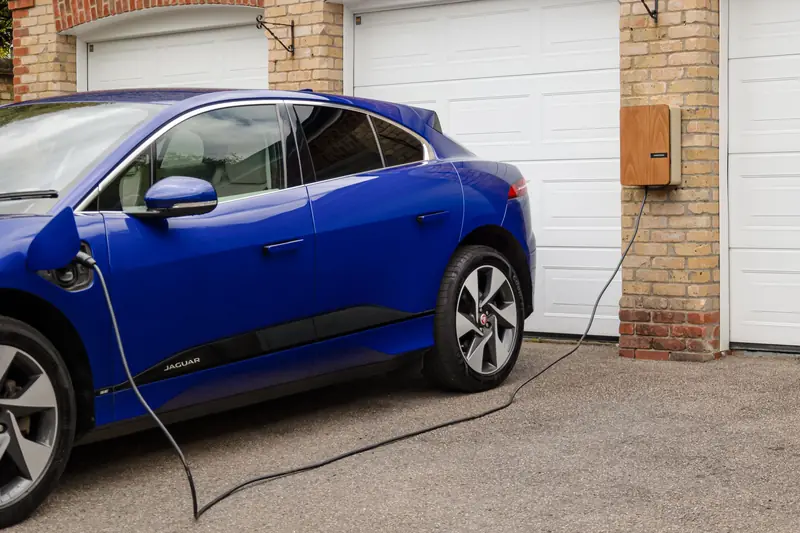
What a Level 2 install involves
A Level 2 charger runs on a dedicated 240-volt circuit, the same kind of supply as an electric dryer. Most home chargers sit on a 40- to 60-amp circuit, sized to the charger and to your panel.
- Panel check. Your electrician confirms there is room and capacity. If the panel is tight, a lower-amp setting or a load-managed charger can avoid an upgrade.
- The run. Garage installs next to the panel are simplest. Long runs, detached garages and outdoor posts cost more.
- Hardwired or plug-in. A hardwired charger, or a plug-in charger on a 240-volt outlet (often a NEMA 14-50). Your electrician will say which suits your charger and code requirements.
- Outdoors. Weather-rated equipment and GFCI protection where code requires it.
The South Bend permit
The City of South Bend publishes a permitting checklist for residential EV chargers, and installs need an electrical permit from the South Bend/St. Joseph County Building Department. Your electrician files it and books the inspection.
What changes the price
- Distance from the panel to where you park.
- Whether the panel has capacity, or needs load management or an upgrade.
- Charger type: hardwired, or a 240-volt outlet.
- Trenching or conduit for a detached garage or driveway post.